
Installing water softener units at home can help protect your plumbing, fixtures, appliances, and daily water quality. If you deal with hard water in home areas, you may notice stains, scale, dry skin, or poor soap performance. Over time, minerals can create hard water plumbing buildup inside pipes and appliances. A proper water softener installation helps reduce these issues. With the right water softener setup, your home can feel cleaner, smoother, and easier to maintain.
Why Is Installing Water Softener Units Helpful for Your Home?
Installing water softener units helps reduce the mineral problems caused by hard water. Hard water contains calcium and magnesium. These minerals can leave scale on fixtures, dishes, shower doors, faucets, and plumbing parts. Over time, buildup can affect comfort and system performance.
Many homeowners do not notice hard water damage right away. I often see people blame soap, appliances, or old fixtures before they suspect the water itself. If you have hard water in home plumbing, minerals can collect inside water lines, water heaters, valves, and fixtures. This can create hard water plumbing buildup that reduces efficiency and increases wear. A well-planned water softener installation helps improve daily use, support cleaner fixtures, and reduce long-term stress on your plumbing system.
What Problems Can Installing Water Softener Units Help Reduce?
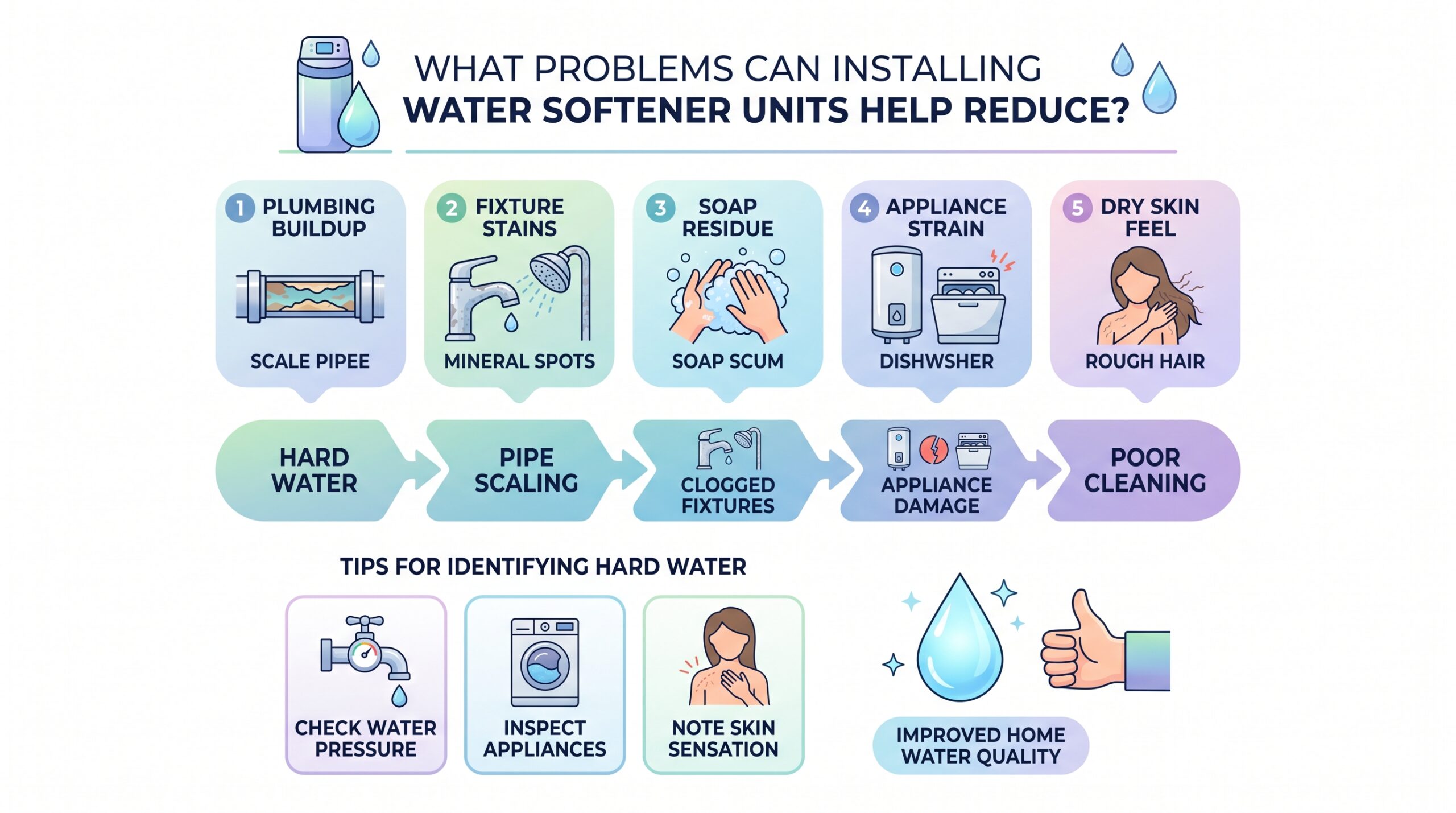
Installing water softener units can help reduce many daily problems linked to hard water. These issues may seem small at first, but they can add up over time. If your water leaves stains, residue, or buildup, your home may benefit from a softener.
- Hard water in home: Mineral-heavy water can affect cleaning, bathing, and plumbing performance.
- Hard water plumbing buildup: Scale can collect inside pipes, fixtures, and connected appliances.
- Soap residue: Hard water can make soap harder to rinse away.
- Fixture stains: Mineral spots can appear on faucets, sinks, and shower doors.
- Appliance strain: Water heaters and dishwashers may work harder with mineral buildup.
- Dry skin feel: Hard water can leave skin and hair feeling rough after washing.
You should think of water softener setup as a comfort and protection upgrade. It can make showers feel better, dishes rinse cleaner, and fixtures easier to maintain. A professional can check your water, review your plumbing layout, and choose the right installation point. This makes installing water softener units more effective. It also helps protect your home from hidden mineral buildup that can reduce performance over time.
How Does Water Softener Installation Protect Plumbing?
Water softener installation helps protect your plumbing by reducing scale-forming minerals. When hard water moves through pipes every day, minerals can cling to interior surfaces. That buildup may narrow flow paths and stress fixtures. Softer water helps limit that problem.
A proper water softener setup can also support your water heater, washing machine, dishwasher, faucets, and shower valves. I have seen homes where mineral buildup caused weak flow, clogged aerators, and shortened appliance life. With installing water softener systems, your water becomes easier on plumbing parts. This can help reduce maintenance needs and improve performance. Your installer may also check water softener for leaks after setup to ensure connections stay secure. Better water quality can support smoother flow, cleaner fixtures, and fewer mineral-related problems.
| Hard Water Issue | What You May Notice | How Softening Helps |
| Mineral scale | White crust near faucets | Reduces buildup on fixtures |
| Pipe buildup | Lower water flow | Helps protect waterlines |
| Appliance strain | Poor performance | Supports longer appliance life |
| Soap residue | Sticky or dull surfaces | Improves rinsing and cleaning |
When Should You Consider Installing Water Softener at Home?
You should consider installing water softener units when hard water affects your comfort, cleaning, or plumbing. If stains keep returning, soap does not lather well, or fixtures collect scale quickly, your water may need treatment. Early action can help prevent deeper buildup.
- White scale appears: Mineral deposits often show hard water problems.
- Soap rinses poorly: Hard water can leave residue on skin and surfaces.
- Fixtures clog often: Aerators and showerheads may collect minerals.
- Appliances struggle: Dishwashers and water heaters may lose efficiency.
- Plumbing flow weakens: Scale can contribute to reduced water movement.
It is better to act before mineral buildup becomes severe. Once hard water plumbing buildup develops inside lines or appliances, cleaning becomes harder. A plumber can review your water supply, test hardness levels, and recommend the best softener size. They can also explain the installation process, including where to shut off main water supply valve, how to connect water softener drain line, and how to confirm safe operation. This gives you a cleaner, more dependable system.
Why Should Professionals Handle Water Softener Setup?
Professional water softener setup matters because the system connects directly to your home’s main water line. Correct placement, secure fittings, proper drainage, and accurate programming all affect performance. A poor setup can create leaks, drainage issues, or poor softening results.
During water softener installation, a plumber can safely shut off main water supply valve, connect inlet and outlet lines, and connect water softener drain line correctly. They can also prepare brine tank, check salt level guidance, and program water softener control valve based on your household needs. I always recommend professional setup because small mistakes can cause big problems later. After installation, the technician should check water softener for leaks and run regeneration cycle to confirm the system works properly. That gives you better performance from day one.
What Steps Are Included in Installing Water Softener Units?
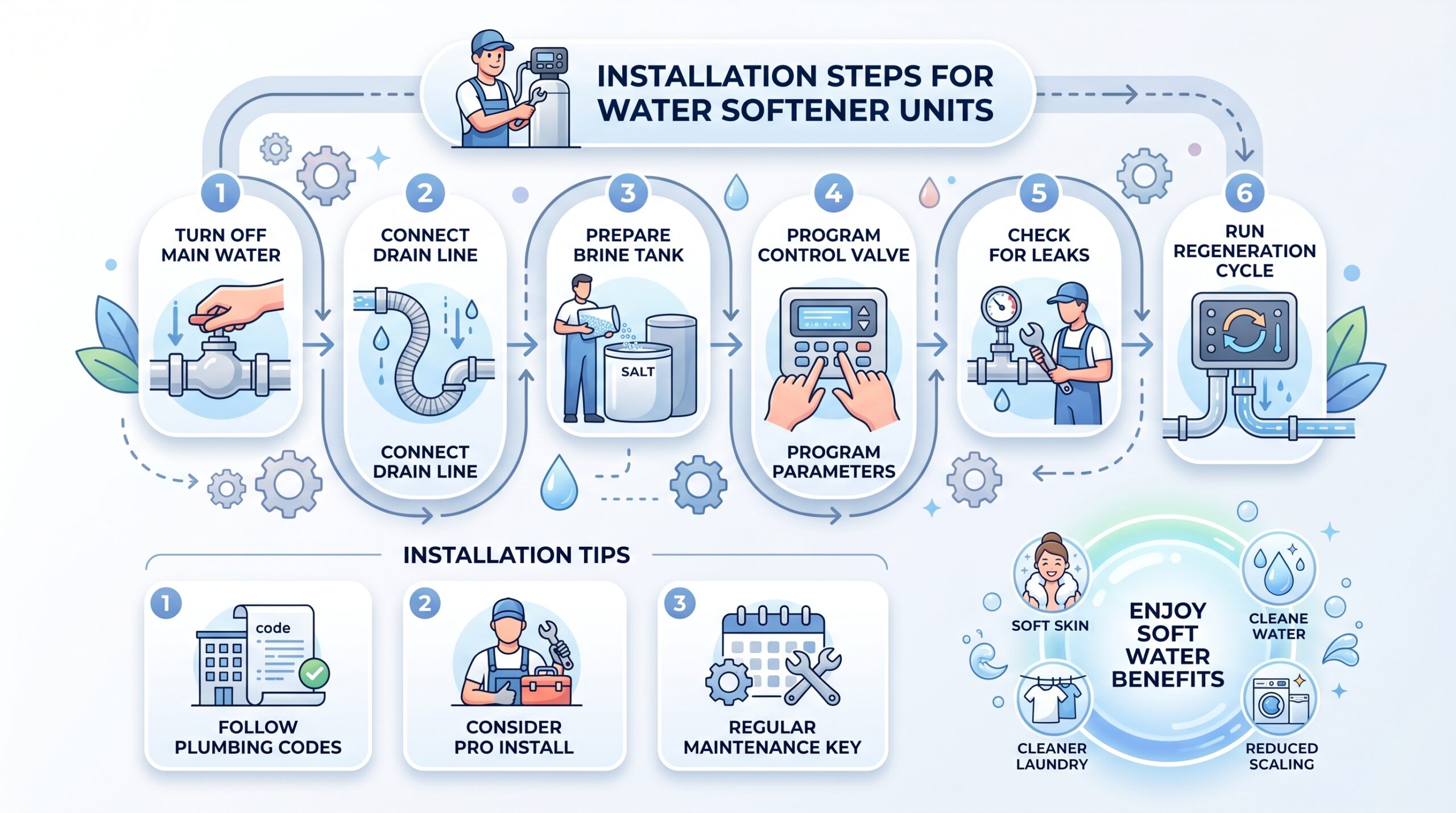
The process of installing water softener units should be careful and organized. Your installer needs to protect your plumbing, connect the system correctly, and test the unit before finishing. Each step helps your softener work safely and efficiently.
- Shut off main water supply valve: This prevents water flow during installation work.
- Connect water softener drain line: Proper drainage supports safe regeneration cycles.
- Prepare brine tank: The tank must be ready for salt and softening operation.
- Program water softener control valve: Correct settings match your water use and hardness.
- Check water softener for leaks: Final leak testing helps protect floors and walls.
- Run regeneration cycle: This confirms the system starts working correctly.
You should ask your installer to explain how your unit works before they leave. This helps you understand salt refills, settings, maintenance, and warning signs. A quality water softener setup does more than connect equipment. It gives you confidence in daily use. With proper setup, installing water softener units can reduce mineral buildup, protect appliances, and make your water feel better throughout your home.
How Can a Water Softener Help With Hard Water in Home Plumbing?
A water softener helps reduce hard water in home plumbing by removing minerals before they move through fixtures and appliances. This can reduce scale on faucets, showerheads, dishes, tubs, and water-using equipment. It also helps cleaning feel easier.
Hard water often creates slow, steady damage. You may clean white spots again and again, but the minerals keep returning. Inside plumbing, the issue can be harder to see. Hard water plumbing buildup may affect valves, aerators, and appliance connections. With installing water softener systems, your water becomes less harsh on these parts. This can improve comfort, reduce buildup, and support better long-term home maintenance. It also helps protect your investment in appliances and plumbing fixtures. You can learn more by clicking here.
What Do Homeowners Ask About Installing Water Softener Units?
What are the main benefits of installing water softener units?
Installing water softener units can reduce mineral buildup, improve cleaning, and protect plumbing fixtures. It can also help appliances work with less scale. Many homeowners notice cleaner surfaces and softer-feeling water.
How do I know if I have hard water in home plumbing?
You may see white scale, spots on dishes, soap residue, or clogged showerheads. Hard water in home plumbing can also cause buildup inside fixtures. A water hardness test can confirm the issue.
Why does the installer need to shut off main water supply valve?
The installer must shut off main water supply valve to stop water during the connection process. This helps prevent leaks and flooding. It also allows safer work on your main line.
Why is it important to connect water softener drain line correctly?
You must connect water softener drain line properly because the unit needs drainage during regeneration. A poor drain connection can cause water problems. Professional setup helps avoid leaks and drainage concerns.
How often should you check water softener for leaks?
You should check water softener for leaks after installation and during regular maintenance. Look near fittings, drain lines, and the brine tank. Fast attention helps prevent water damage.
Need Help Installing Water Softener Units at Home?
Installing water softener units can make your home easier to clean and maintain. If hard water leaves stains, buildup, or fixture problems, a softener may be a smart upgrade for your plumbing.
Advantage Plumbing Plus, LLC helps homeowners in Wausau, WI, and nearby areas with dependable plumbing solutions. Our team can assist with water softener installation, water softener setup, leak checks, drain line connections, and system guidance. We focus on clear communication, careful work, and practical service that helps reduce hard water plumbing buildup and protect your home.
- Company Name: Advantage Plumbing Plus, LLC
- Phone Number: 7153597473